The knowledge base for education has evolved considerably, as the new tools of neuroscience show how the brain develops and how environments interconnect with social, emotional, physical, and academic domains to influence learning and development. New insights into how people learn imply that important changes should be made in both schools and educator preparation programs to support whole child learning and development. To shift classrooms into learning environments that support the whole child, teachers themselves must learn their craft in preparation programs that attend to the science, structures, and practices that support deeper learning and equity.
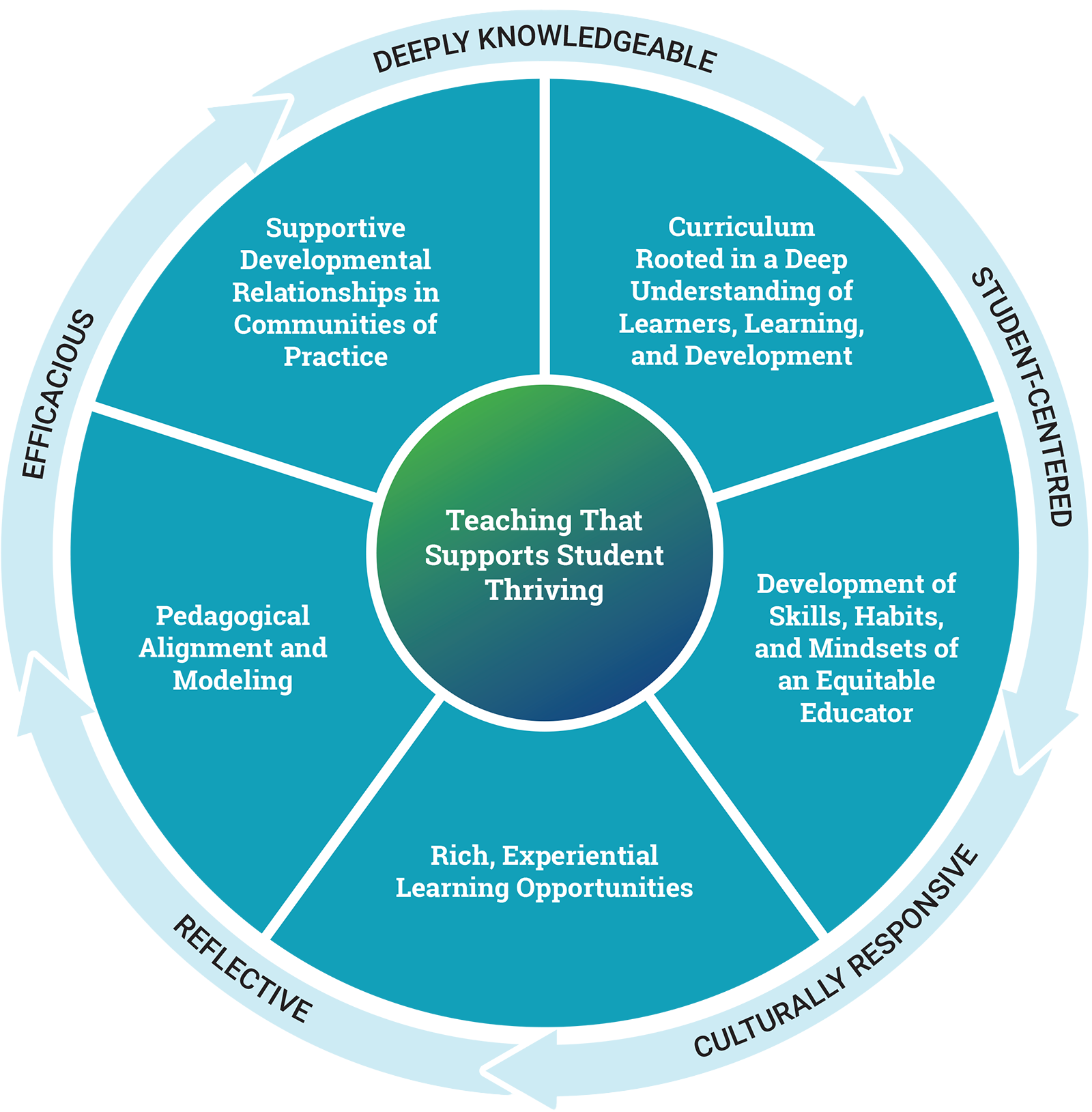
In response, this guide incorporates the emerging research with the wisdom of practice found in exemplary preparation programs to create a set of design principles that enable programs to model SoLD-aligned approaches to teachers. Educating the whole child is possible when teachers understand the underlying theory of SoLD and develop skills that allow them to create conditions where children and adolescents can thrive. When teachers hold a deep understanding of learners, use this knowledge in their curriculum, and incorporate practices centered on positive relationships and rich learning experiences, classrooms can become vibrant, joyful environments. Successfully doing this work with diverse students also requires the skills, habits, and mindsets of an equitable educator, which are developed through authentic learning experiences that encourage reflection and pedagogical alignment between university classrooms and clinical placements. This learning for teachers is strengthened through supportive developmental relationships in communities of practice. While programs can prepare candidates through a SoLD-aligned approach, educators also need schools that are structured to support such teaching. Thus, these principles lay the groundwork for a related framework for leader preparation, designed to ensure that system leaders can support teachers by creating organizational environments that promote practices aligned with SoLD.
Teachers commonly enter the profession with the hope and intention of helping young people reach their potential. The extent to which they can do this often provides intrinsic satisfaction and motivation to remain committed to their careers and to high-quality instruction. Preparation programs can contribute to these desired outcomes by preparing candidates to create the outcomes that students and families deserve and that most teachers also want. These design principles can become the foundation for a new approach to learning as preparation programs integrate and implement the conditions teachers need to support whole child education by creating equitable classrooms that promote the optimal development of each child.