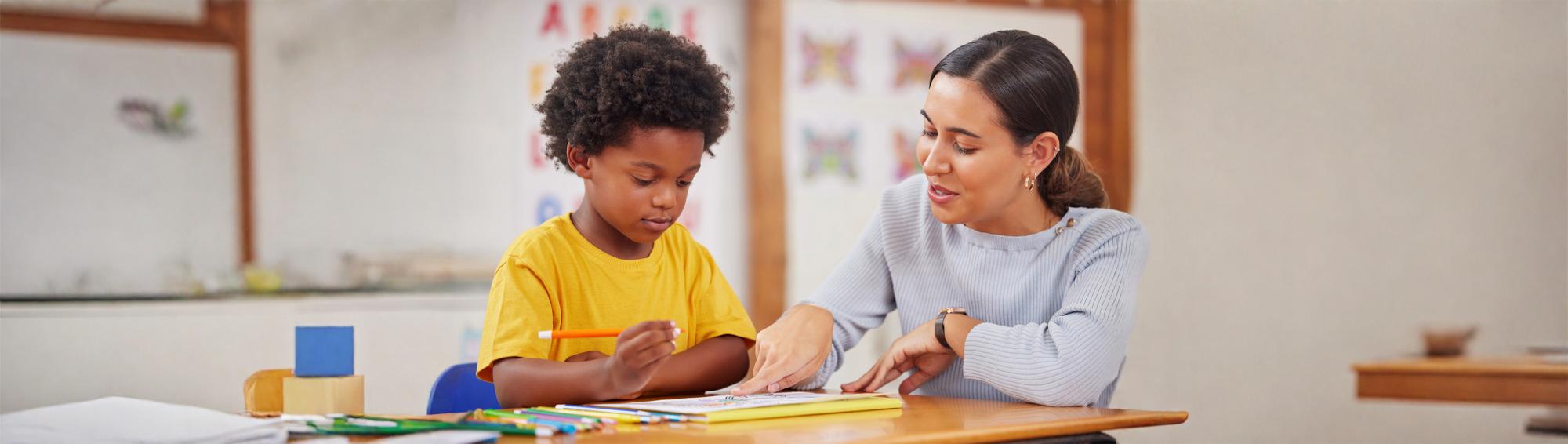
At Towson University in Maryland, preservice teachers gather in class to practice and develop their own social and emotional skills. Their instructor starts class by having them focus on their breathing, concentrating on the positivity that each of them brings to the class. She then reminds them that this simple practice can help multilingual learners start class in a more focused manner. She gives insight into how some multilingual learners might be estranged from family, have other issues related to being in a new environment, or find themselves frustrated while learning a new language in addition to adjusting to a new culture.
She shares how students might get teased for mispronouncing words or how they might be missing their friends. She says, “There are so many factors that go into what a child brings to class. One of your main goals should be to try and connect with them so that you can promote learning by building on students’ strengths using social and emotional learning and asset-based instruction to help them be successful.”
She next has the teachers search on their phones for a country they would like to move to where English is not the primary language so they can reflect on the obstacles they might face in a new environment. She asks, “What kinds of emotions are generated by thinking about all that is involved with moving?” This sparks a rich discussion in the class, where the future educators talk about how they are fearful of having to find a job in a new location where people do not speak English, find a home, and make new friends, all while being homesick.
The instructor then says, “Imagine you are going through all of that and, at the same time, the pandemic hits. All of those factors together would be stressful for anyone, no matter how prepared they might be. As a result, students and families in general can benefit from building their social and emotional skills, yet multilingual learners might have a greater need to access these skills. To be equitable educators, we should reflect on our individual students’ needs and strengths to ensure that we are supporting them to succeed.”
What the Science Says
Because learning and development are relational and highly context sensitive, it is important that all students experience environments of trust and belonging. Warm, caring, supportive teacher–student relationships are linked to better school performance and engagement, greater emotional regulation, social competence, and willingness to take on challenges.1 Strong relationships have biological as well as affective significance. Brain architecture is developed by the presence of warm, consistent, attuned relationships; positive experiences; and positive perceptions of these experiences.2 Such relationships help develop the emotional, social, behavioral, and cognitive competencies that are foundational to learning.
Children’s ability to learn and take risks is enhanced when they feel emotionally and psychologically safe; it is undermined when they feel threatened. A meta-analysis of 99 studies found that the affective quality of teacher–student relationships was significantly related to student engagement and achievement. Students often placed at risk in school and society—children of color, those from low-income families, and those with learning differences—were harmed most by negative teacher affect and benefited most from positive relationships with teachers.3
Students learn best when they can connect what happens in school to their cultural contexts and experiences, when their teachers see their families and communities as assets and are responsive to their strengths and needs, and when their environment is identity safe, reinforcing their sense of value and belonging. This is especially important given the societal and school-based challenges many children, especially those living in adverse conditions, experience. For all these reasons, and because children develop through individual trajectories shaped by their unique traits and experiences, teachers need to know students well to create productive learning opportunities. Building highly favorable conditions into the environments in which children grow and learn—including trust, connections to children and families, and supports—improves equity of experience and opportunity. All of these understandings are key to the development of the knowledge, skills, and dispositions of equitable educators.
Overview of Development of Skills, Habits, and Mindsets of an Equitable Educator
- develop self-awareness and inquiry skills to guide continuous learning, including learning about children and their experiences, strengths, and needs and how to build on those strengths and meet those needs;
- develop mindsets and key dispositions, including empathy; social, emotional, and cognitive skills that support learning; cultural competence; and the ability to support children’s healthy identity development;
- develop the skills to create classroom communities that honor all learners, where students learn and construct meaning together, with responsive and supportive connections fostering students’ trust, sense of belonging, and positive identities;
- develop the pedagogical knowledge and skills to create and scaffold rich, meaningful tasks that are accessible to students and implemented in ways that support the development of a growth mindset, perseverance, resilience, and problem-solving abilities;
- understand the national, local, historical, economic, and political contexts of schooling; their impact on students’ experiences and learning; and how they are manifested in schools and classrooms; and
- build strong partnerships with families, communities, and other educators in order to teach from an asset-based, culturally responsive stance.
What Teachers and Teacher Educators Can Do
Because learning is relational, it is paramount that teachers develop the mindsets to support all students well and equitably.
Because learning is relational, it is paramount that teachers develop the mindsets to support all students well and equitably. These mindsets start with an authentic curiosity about oneself and others, as well as a positive disposition about learning and equity that supports compassion; care; an acknowledgment that everyone holds evolving beliefs and biases that influence decision-making; and an acceptance and honoring of students’ backgrounds, experiences, and social identities. They also include dispositions and skills for engaging in trauma-informed and healing-oriented practices for students who face adversity.
Equitable educators cultivate dispositions within themselves and their students that include empathy; social, emotional, and cognitive skills that support learning; cultural competence; and healthy identity development, as well as personal and professional identities rooted in these capacities. Among the cognitive skills they support are those productive for learning, such as executive function and growth mindset, as well as the problem-solving, perseverance, and resilience that enable children and adults to function in the face of daily challenges.
Developing Social and Emotional Learning
- become aware of their emotions,
- learn how to manage their emotions,
- interact well with others,
- understand how their behavior affects and is affected by others,
- set goals both personally and academically, and
- make appropriate decisions that help them succeed.
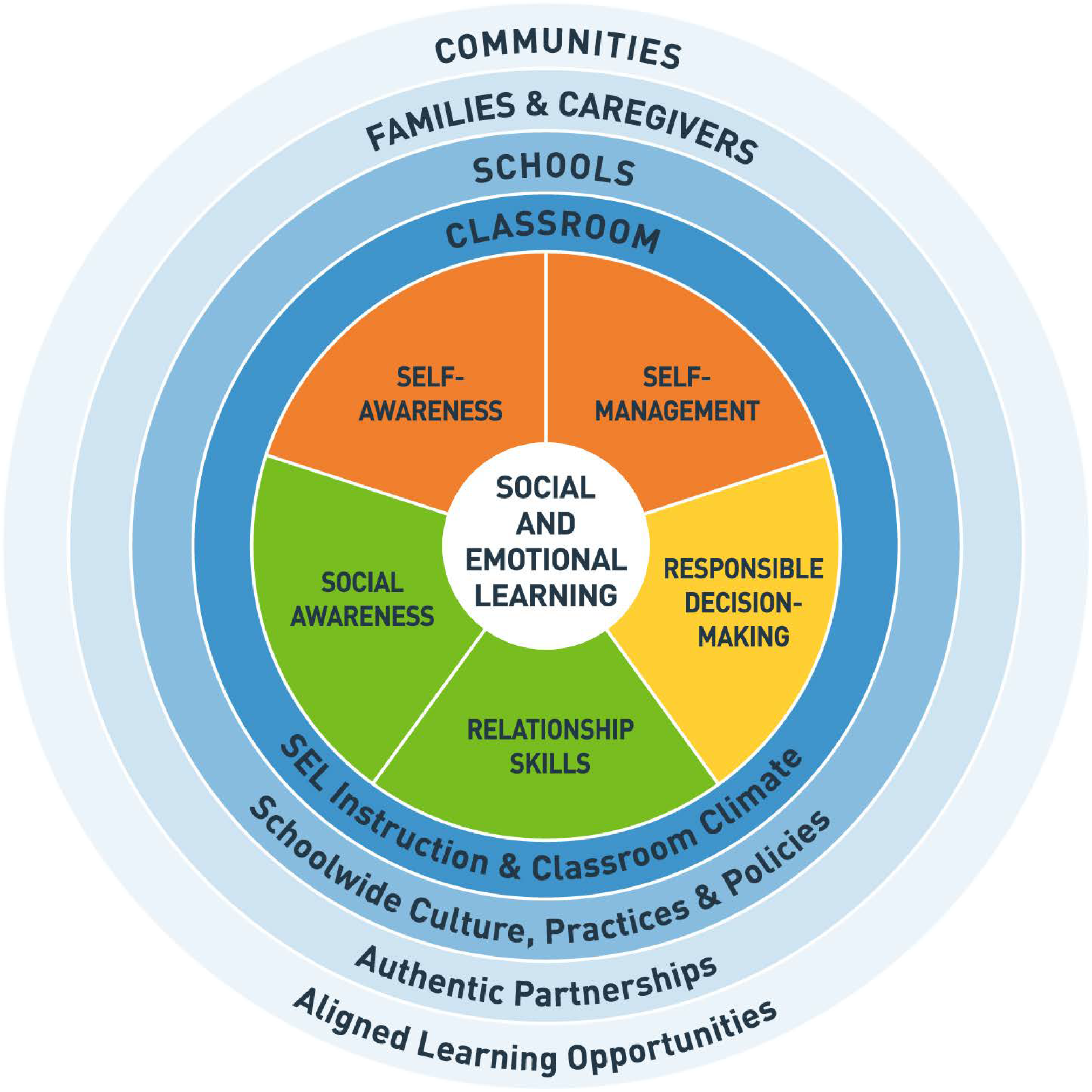
Cognitive skills such as problem-solving, perspective taking, and executive function interact with emotional skills such as emotion recognition, empathy, and emotion regulation, and with social skills, including cooperation, helping, and communication.4
These skills are developed not only through specific lessons or programs but also through a set of reinforcing practices infused throughout the school day and in all parts of the environment. For example, teachers who can construct authentic tasks that feature strong scaffolding and well-supported collaboration develop social and emotional skills that can also support motivation and achievement. If they incorporate well-designed self- and peer assessment practices focused on meaningful feedback and opportunities for revision, they can also help students develop a sense of efficacy and confidence, leading to increased competence and a growth mindset. These in turn support problem-solving and resilience.5 This is equally true within teacher education itself, where instructors and mentors need to model and enable social and emotional learning for prospective teachers through all aspects of the program. Teachers should also learn how to support the varying needs of students who have had different kinds of home and schooling experiences, including some who have experienced traumatic events that impact their learning, creating an even greater need for particular social, emotional, and cognitive supports. The vignette in Social and Emotional Learning for Teachers of Multilingual Learners provides a glimpse of how these skills can be taught in an educator preparation classroom with these kinds of considerations in mind.
Preparation programs can also help candidates think of their own well-being and can introduce activities that help them focus on their own social and emotional learning, such as pausing to stretch to refocus in class, doing guided meditation, reading materials that focus on emotions to open the door to conversations related to how to work through different feelings, and making time with themselves as well as their students for goal setting and self-care.
Constructing Community That Enables Positive Relationships
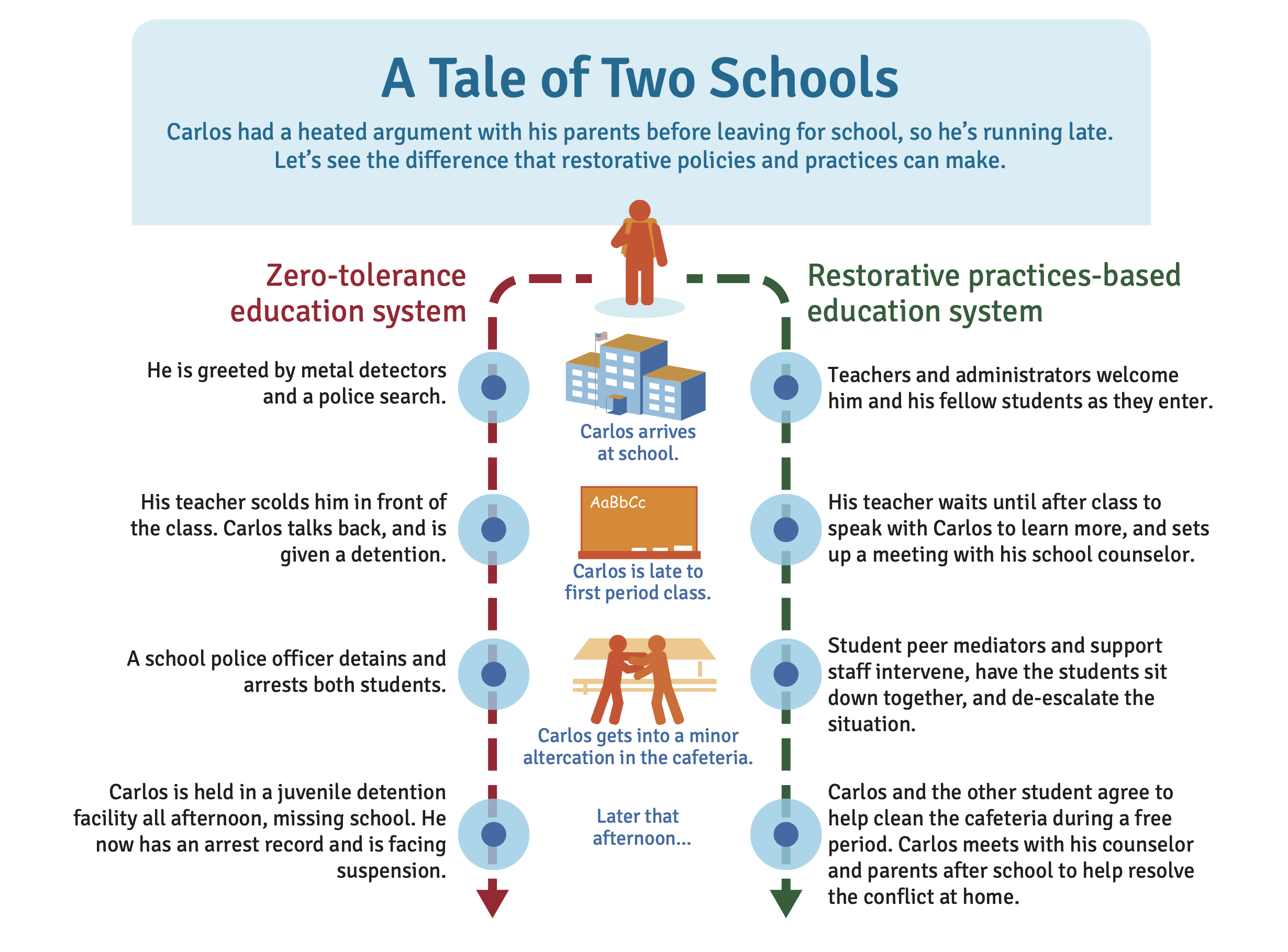
Preparation programs also need to support teacher candidates to develop the skills to create classroom communities that honor all learners, helping children negotiate relationships with peers and adults with care and respect. This includes learning to use restorative practices to support inclusion and community building; support classroom learning environments; and replace punitive, coercive, and exclusionary disciplinary approaches with proactive development of community caring, coping mechanisms, and conflict resolution skills that help students develop empathy for one another and an understanding of their own behavior. Such practices result in fewer and less racially disparate suspensions and expulsions, fewer disciplinary referrals, improved school climate, higher-quality teacher–student relationships, and improved academic achievement across elementary and secondary classrooms.6 Restorative approaches are also grounded in ameliorating long-standing inequities in schools and society by building safe, inclusive learning environments where consistent, caring relationships can thrive and every young person is valued and affirmed.7
The illustration in Figure 5 provides two very different scenarios that show how restorative policies can make a difference in outcomes for students.8 Teaching how to implement and advocate for this approach by modeling it for and with future teachers, which enables them to experience it for themselves, is important.
The following reflection from a teacher’s observation of restorative justice practices for the first time illustrates the power of the approach:
I was invited to an elementary school that had implemented restorative justice practices starting with their kindergarten class, and each year they added in more grades until they finally had all grades using it. As a result, the principal of the school welcomed educators to come and observe it in action. When I observed students in 3rd grade, they were clearly very familiar with the process. I was immediately fascinated by how well the students were able to sit in a circle and express their feelings. It reminded me of group therapy, except that this was taking place in the classroom. In one classroom I observed, students sat in a restorative circle and tossed around a ball to share how they were feeling that morning. They added why they were feeling that way as well. When one student shared how they were sad because they didn’t get along with their sibling that morning, the other students chimed in to give advice on how to work through it once they got home. The teacher also added to the conversation. In another classroom, I noticed students sitting in a circle were discussing a conflict a few students had encountered at recess. They talked through the issue with their teacher’s guidance. I had never seen such deep conversations in a classroom to work through issues that were not related to content objectives, yet had they not worked through these issues, the students would have likely not been able to focus on the lesson. I was later informed that the middle school across the street from them was now starting the same process grade by grade. This is amazing! I can’t wait to try it with my students in the future. 9
Click figure to enlarge.
Checking Bias and Developing Empathy
Strongly related to teachers’ development of capacities like social-emotional competencies and empathy are the beliefs they carry and how those beliefs influence their views of students and student learning. Helping Teachers Develop Empathy Teachers’ perceptions of students shape expectations that often predict student achievement apart from prior ability. While most teachers enter the profession with a passion for fostering children’s learning, growth, and development, implicit and unconscious biases can play a role in how they interact with their students. Thus, educators need to learn how to proactively cultivate positive and affirming attitudes and understand the dynamics of implicit and attributional biases in order to create culturally sensitive and identity-safe environments.10 The dispositions to do this, as well as the knowledge and skills, can be taught.

Reflective educators can seek information and help students solve problems when challenges emerge—which contributes not only to motivation but also to an asset-based orientation toward families, communities, and students. Educators can also focus on their own role in creating conditions conducive to learning in both their classrooms and the school as a whole. Schools can trigger rather than ameliorate social identity threats that undermine students’ confidence and performance when they group or track students in ways that convey messages about perceived ability, deliver stereotypical messages associated with group status, or emphasize ability rather than effort (e.g., “innate intelligence” vs. “hard work”) in their judgments about students and their attributions of causes of success.11
Understanding and Addressing Inequality
Being able to develop the skills and dispositions of an equitable educator requires that teachers understand the historical, social, economic, and political contexts of the United States as well as the more localized communities in which they teach. Further, it is important that they understand how these contextual realities interact and directly impact the experiences of students, their understanding of themselves, their perceptions of their social identities, and their learning. Some of this learning may come from reading scholars whose social and historical research raises consciousness and awareness.12 More of it may come from direct, guided inquiry into both school settings and community settings in which candidates are placed.13
Preparation programs need to help teacher candidates develop an understanding of equity issues and dilemmas that arise in classrooms and schools.
Preparation programs need to help teacher candidates develop an understanding of equity issues and dilemmas that arise in classrooms and schools. An important part of teacher preparation is helping candidates build a commitment to engage—and a skill set to tackle—hard questions and situations that involve issues such as race, class, and power. Both teacher educators and candidates should seek to understand how these issues impact their understanding of themselves, their positionality, their understanding of privilege and how that has affected their experiences, and how these understandings influence their views of students’ ability and learning. This understanding and skill set—often developed through autobiographical inquiry into experiences of privilege, discrimination, and inequality14—can help facilitate the acknowledgment and reduction of bias and create more equitable teaching practices and learning environments. A result of such preparation is using this lens to critically analyze curriculum choices. Table 1 provides an example of a practical scaffolding tool to learn these skills.
| Unit title: | |||
|---|---|---|---|
| Questions to consider: | Current state of the unit: | Changes needed: | Resources to support changes: |
| Whose voices, perspectives, or experiences are heard in this unit? (This might be through texts, quotes, stories, examples, primary sources, video, social media, articles, etc.) | |||
| Whose voices, perspectives, or experiences are centered in this unit? | |||
| Whose voices, perspectives, or experiences are marginalized in this unit? | |||
| Whose voices, perspectives, or experiences are missing from this unit? | |||
| What identities are included in this unit? Consider all facets of identity: race, religion, gender, gender identity, ability, socioeconomic status, ethnicity, sexual orientation, family structure, language, citizenship, age, etc. | |||
| What systems of power are shown through this unit? | |||
| Who is shown to benefit from these systems of power? What benefits are shown/explained? | |||
| Who is shown to be harmed by these systems of power? What consequences or forms of oppression are shown/explained? | |||
| What examples are provided of people taking action or pushing back on systems of oppression or abuses of power? Who is centered in examples of resistance? Are the people taking action coming from WITHIN the oppressed groups or from OUTSIDE of the oppressed groups? | |||
| How are groups of people shown in a variety of ways throughout this unit? | |||
| What groups of people are shown making positive contributions to the world in this unit? | |||
| How does this unit connect to the lives of students? What makes this unit relevant to students and to today’s world? | |||
| How does this unit invite students to take action against bias and injustice? | |||
| How does this unit draw on experiences and knowledge of students? | |||
| How does this unit provide opportunity for student-led inquiry? | |||
| How does this unit honor multiple ways of knowing, multiple ways to access knowledge, and multiple ways to demonstrate knowledge? | |||
When educators develop an understanding of how to critically examine curriculum and teaching practices and the ways these may inadvertently promote bias and marginalization, they move further toward eliminating inequity. This understanding is required of teacher education faculty as well as candidates if it is to be infused in the preparation program.
These dispositions are supported and strengthened when teachers organize and build partnerships with families, community members, and other educators around children’s learning strengths and needs. This requires preparation programs to engage the local community in a collaborative community of practice that can support student learning and build teachers’ knowledge and capacity to approach students, families, and communities from an asset-based orientation. Asset-based dispositions, mindsets, and practices highlight what students bring to the classroom that can be used to build learning opportunities, rather than focusing on students’ perceived deficits. In order to engage productively in such communities of practice, teachers need to develop culturally sensitive, respectful, and opportunity-centered listening and questioning skills that enable them to learn about their students’ lives and learning strategies in order to create more coherent, well-reinforced learning opportunities between home and school. These, in turn, can help create environments where students feel culturally respected and emotionally and intellectually safe. This type of shared learning can occur only when preparation programs have authentic, reciprocal relationships with partner districts, families, youth, and communities. (See also Supportive Developmental Relationships in Communities of Practice).
These skills, knowledge, and dispositions build the foundation on which preparation programs help candidates learn how to translate knowledge of students’ lives, experiences, and prior learning into rich, relevant tasks with appropriate scaffolding and supports. To engage in this type of culturally responsive pedagogy, teacher candidates need to know how to surface and build on prior experience, understand how children are thinking, and construct tasks that are approachable and motivating. Using a “funds of knowledge” framework,15 candidates can learn how to captivate children’s interest and foster deep learning by linking experiences and skills from children’s everyday lives and cultures to classroom instruction.16
Building on Students’ Experiences and Connecting With Families
Teachers should think of their learning community as including students, families, community members, and other experts who have knowledge of students and their learning. Teacher candidates can benefit from learning how to access students’ own views about their learning through conferencing, students’ reflections on their work, exit tickets, group discussions, and other means.
Schools that create meaningful relationships with families and actively engage them in having a voice, programming, and the learning environment increase student achievement and create a positive culture. Teaching must be a collaborative endeavor that taps into the expertise of all members of a community.17 Family and community members have expert knowledge of their children and lived experiences that teachers can learn about and use in their lesson planning and instruction.
Teacher candidates can develop an asset-based view of students and families by engaging with them in the context of community-based organizations and services in the place where they are student teaching. In some programs, candidates complete clinical placements in after-school or recreation programs in order to experience families and the community in a different way than school allows. Candidates can also hear from well-regarded community organizers and leaders of grassroots organizations who are trying to improve living conditions and spend time studying the local community. By studying the sociopolitical histories of the neighborhoods in which they conduct their clinical placements, preservice teachers become familiar with community assets (e.g., churches, community-based organizations and activities) and challenges (e.g., environmental pollution that breeds health concerns) and learn to appreciate the resilience of those who live there. Preservice teachers can also learn ways to make the curriculum culturally relevant by connecting subject matter to community-based contexts and causes.
Likewise, teachers can offer family members tools and strategies to connect in-school learning to students’ everyday learning and problem-solving at home in English and their native language—for example, sending home bilingual books or keeping in mind families’ literacy and language proficiency levels.18 The more candidates learn to support students’ academic development outside of school, the more students can be ready to learn once at school.
One example of how to support students outside of school can be found in Art Backpack, a family–school–university intervention at Benjamin Franklin Elementary School in Newark, NJ.
Finally, because inequities are often baked into school structures and systems, it is important for preparation programs to enable teachers to understand and negotiate more equitable school policies. Candidates need to be ready to think about, act on, and navigate within the sociopolitical contexts of schools to advocate for more just and equitable opportunities and outcomes for their students. In order to develop as equitable educators, it is critical that teachers develop self-awareness and skills of inquiry to guide continuous learning. These skills will help teachers identify and eliminate inequity-creating and -sustaining routines and practices. The results of a set of equity-oriented inquiries that were intended to help candidates in one teacher education program develop these skills are described by Stanford University student teachers in Learning to Teach for Social Justice.19 These inquiries can include reading case studies of the learning experiences of English learners, students with disabilities, and others who are often marginalized in school; shadowing a student through a full day of school to understand their experience; examining a school’s allocation of curriculum opportunities across classrooms and tracks; interrogating cultural assumptions in both teacher education and student teaching classrooms; and reflecting on the results of lessons aiming to be culturally affirming.
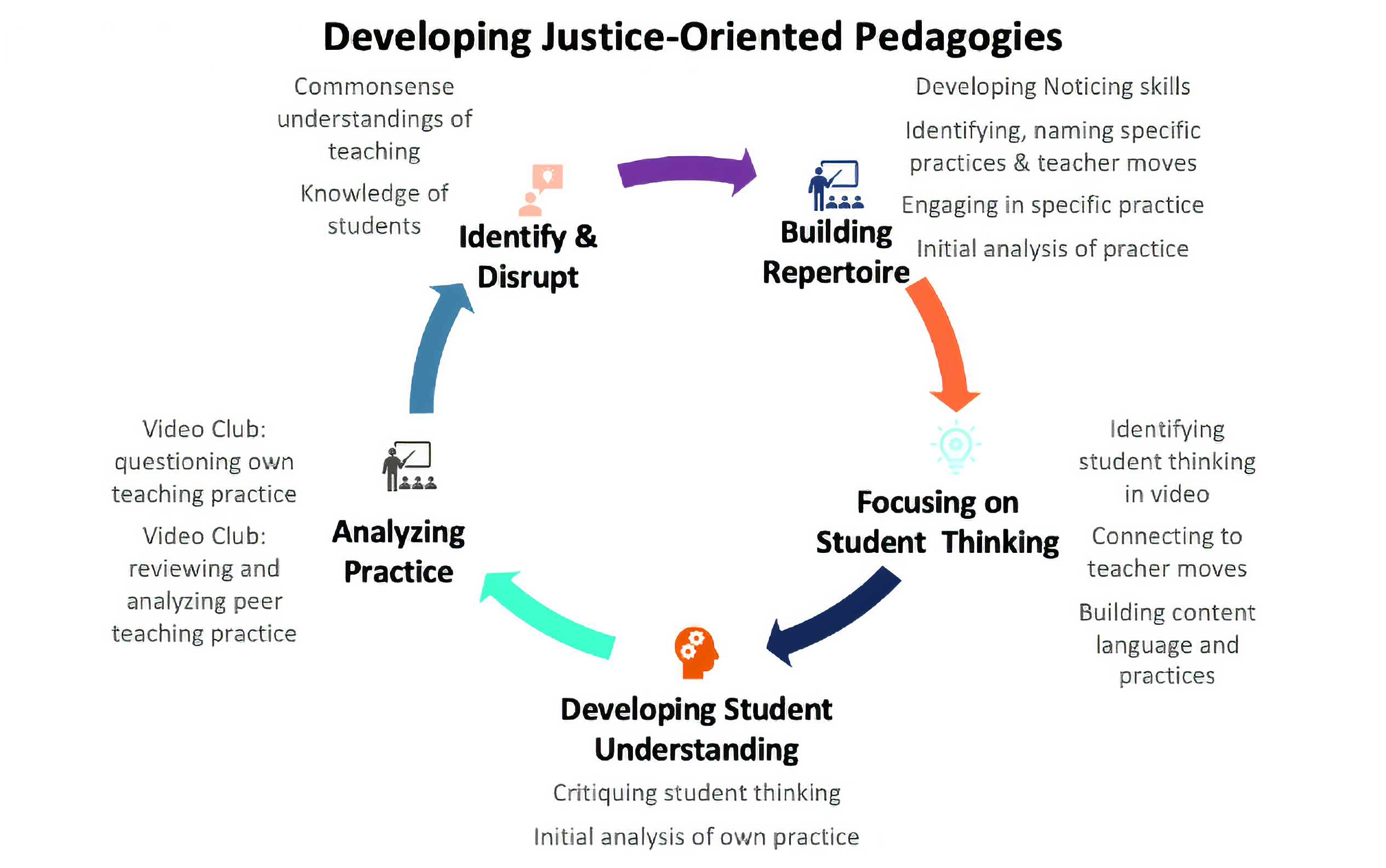
Student-Centered Inquiry and Reflection The vignette in Student-Centered Inquiry and Reflection describes a student-centered inquiry process grounded in video analysis.
Student-Centered Inquiry and Reflection
1.
2.
3.
4.
5.
6.
7.
8.
9.
10.
11.
12.
13.
14.
15.
16.
17.
18.
19.