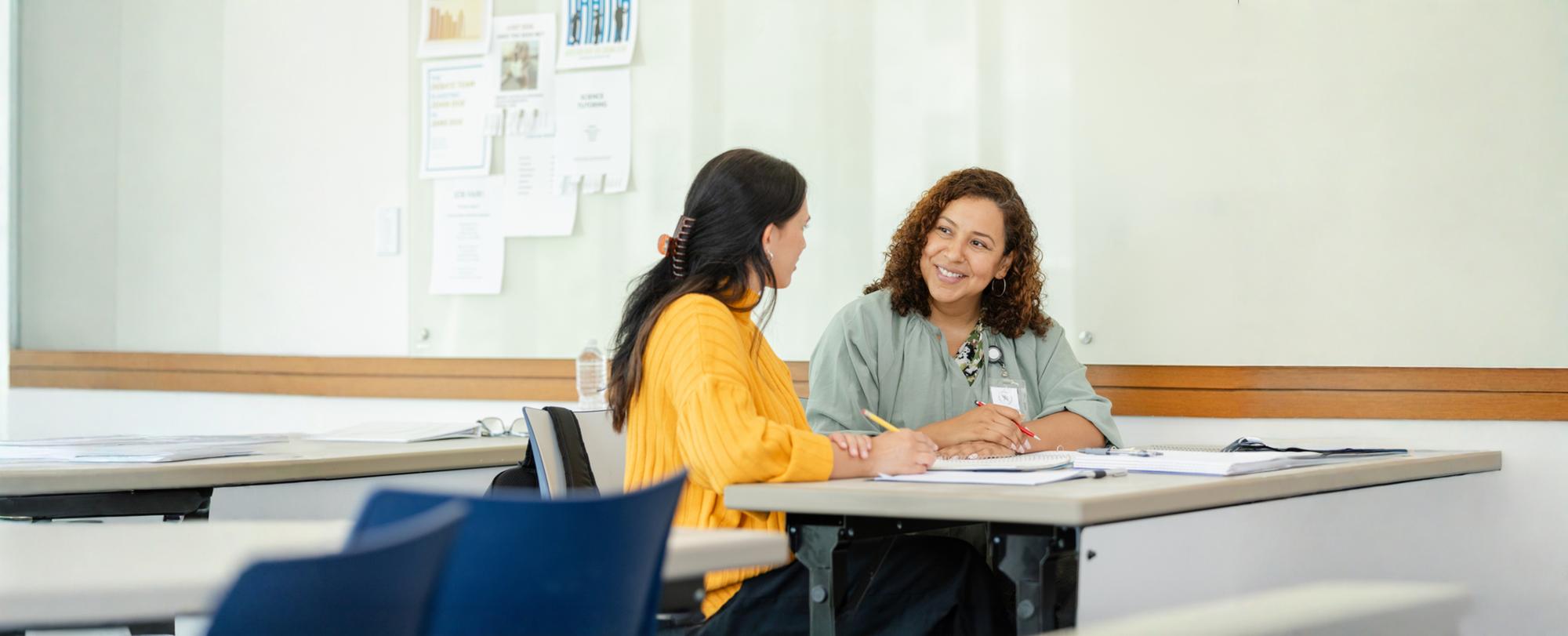
One example of a well-developed teacher residency model is the partnership between Montclair State University and Newark Public Schools, which has had long-lasting impact on both the district and the university. In 2009, secondary education faculty working within the Urban Teacher Residency collaborated with the principal and leadership team at East Side High School in Newark, NJ, regarding becoming a site for math and science residents in the program. East Side’s principal, Mario Santos, clearly articulated his vision that the school raise the standard of teacher quality across all content areas and advocated for a partnership with the school’s math and science departments to begin the process. The goal of creating “models of teaching excellence” for the entire school was shared, and school and university faculty worked together to transform these departments.
University faculty became part of school-based committees, professional development, and events, while the administration, faculty, and staff of East Side High School became active participants in all aspects of the residency as well as other university-established entities, such as the Montclair State University Network for Educational Renewal. After more than 10 years, East Side High School and Montclair State University leaders and faculty continue to be involved in collaborative initiatives, including the university-led New Teacher Induction Program and Red Hawks Rising Teacher Academy/Dual Enrollment Project.
Source: Lehren, M. J. (2020, Spring/Summer). A teacher like me. Montclair magazine.
What the Science Says
Learning is an active, interactive, constructive, and iterative process. Authentic, professional learning communities create opportunities for the interaction of people, problems, ideas, and tools. As noted earlier in this report, human relationships catalyze healthy development and learning. The brain grows and changes throughout life in response to experiences and relationships. The nature of these experiences and relationships matters greatly for learning and development. Optimal brain development is shaped by warm, consistent relationships; empathetic back-and-forth communications; and modeling of productive behaviors. In addition, learning is social, emotional, and cognitive. These understandings of learning and development should shape the strategies and contexts within which teacher candidates learn.1
Learning communities provide opportunities for collaboration with others, which expands the range of experiences each person can encounter. Supportive developmental relationships in communities of practice can optimize teacher candidate learning. They create connections and support learning as colleagues offer greater assistance, allowing each member to gain competence and agency. Developing community practices that strengthen a sense of shared mission is critical. In collaborative communities, members feel personally connected to one another and committed to each other’s growth and learning.
Overview of Supportive Developmental Relationships in Communities of Practice
Teacher candidates can benefit from professional learning communities within their university classrooms, within their clinical placement schools, and within disciplinary and professional groups. These communities can be designed and nurtured to provide supportive environments that allow candidates to productively engage with real problems of practice as they promote active, interactive, constructive, and iterative learning. In such settings, the social aspects of learning come to the fore, as does the active, and shared, construction of knowledge and understanding. Preparation programs should draw in particular upon research describing learning in professional communities to consciously create, model, and help teacher candidates learn to engage productively in these communities and with experienced and expert leaders and colleagues so that they are surrounded with examples and supports for participation, problem-solving, and the work of teaching.2
Programs need strong, reciprocal relationships with PreK–12 schools that hold a common vision for practice featuring sharing, cocreation, and continuous improvement.
To do this, programs need strong, reciprocal relationships with PreK–12 schools that hold a common vision for practice featuring sharing, cocreation, and continuous improvement, enabling clinical placements that are consonant with the candidates’ learning and aligned with program commitments. Engagement in shared research and reflection about practice is another way that communities of practice can learn together. Inquiry and research as a means to analyze practice helps teacher candidates understand the applications of research as well as the tools for research. Lesson study has been identified as one such way for teachers to learn with each other through community designs and efforts to improve practices. Engaging in this type of inquiry collaboratively not only expands candidates’ thinking but also normalizes the practice of using a broader community in the pursuit of developing and employing effective teaching practices that result in deep learning for all students.
It is important to note that a “community” should be expansive and inclusive, incorporating the many members of the school community—faculty and staff in all parts of the school, families, and community organizations that may work with the school—and candidates should have experiences with all these elements of the community, not just a single cooperating teacher in a single classroom. Authentic learning communities require an acknowledgment of and reliance on the expertise that PreK–12 faculty and staff bring in supporting the growth and learning of new teachers, as well as the knowledge that families and communities possess.
Teacher preparation programs that work closely with families and communities understand the expertise that lives within the broader context of students’ lived experiences and tap into that expertise through reciprocal relationships with families and close ties to community-based organizations. This facilitates candidate understanding of the whole child within the contexts closest to the child. These types of relationships are vital because learning within professional communities
provides opportunities to learn from others’ perspectives and expertise; mutual support; and modeling for leading an equity-centered, collaborative classroom.
Programs organized in cohorts with clinical placements in teaching teams can create professional communities in which teachers observe one another, share practices, develop plans together, and solve problems collectively. The teacher residency model (fashioned after medical residencies) is another structure that allows for this type of deep collaborative learning, which can include interacting with students, other prospective teachers, expert teachers, and the tools of teaching (e.g., lesson plans, assessments, technology).
What Teachers and Teacher Educators Can Do
Learning is an active, interactive, constructive, and iterative process. It occurs through the interaction of people, problems, ideas, and tools as people get feedback based on their actions and about their ideas. Professional communities of practice empower developing teachers through mutual support, opportunities to learn from others’ perspectives and expertise, and modeling for leading a collaborative classroom. These learning communities are strengthened when preparation programs have strong, reciprocal relationships with PreK–12 schools and their wider communities.
Engaging in Reciprocal Partnerships
These close “whole school” partnerships create a broader professional learning community between the faculties of the educator preparation program (EPP) and the school that is focused on the collective development of teachers and teaching, as well as learning for adults and children alike. Ongoing consultation, collaboration, and feedback among faculty, mentors, and candidates support inquiry and growth for pre- and in-service teachers and teacher educators. Teacher preparation programs must create structures that give time and resources to develop these communities and employ practices that nurture relationships within collaborative learning spaces.
Such learning communities are more likely to be found as a part of professional development schools (PDS) partnerships, intended to create sites where best practices can be implemented, observed, and studied while providing opportunities for clinical learning for teacher candidates. The University of Colorado Denver (CU Denver) implements a contemporary version of this model of partnership, described in a program-generated resource shown in Figure 7. The CU Denver model is built on a vision of “simultaneous renewal,” in which candidates, clinical teachers, site teams, and the broader school faculty engage in ongoing professional learning and jointly commit to improvement of practice in the school as well as the university.
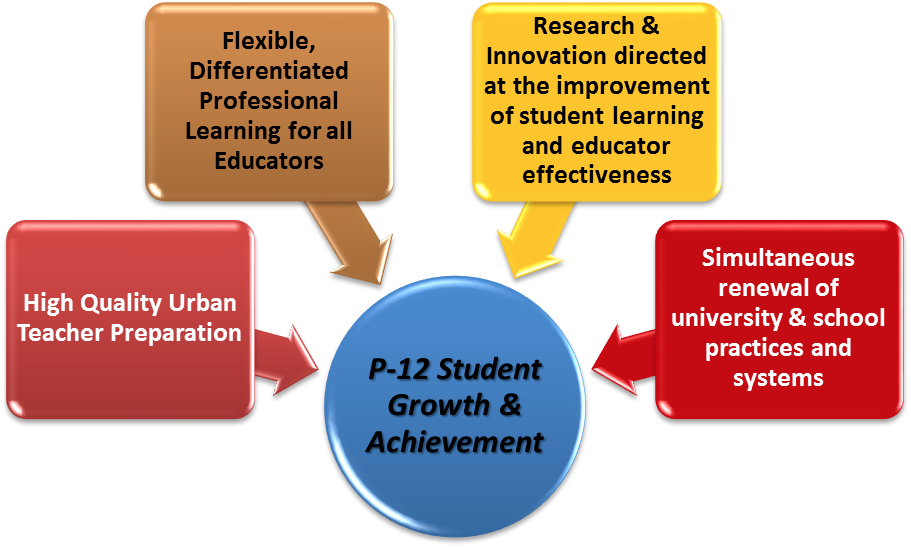
When the PDS model is implemented in full, ongoing professional learning and improvement of practice, including collaborative inquiry and problem-solving, are part of the work of candidates, clinical teachers, university faculty, and school staff, providing opportunities for continuous improvement and renewal.
Strong school–university partnerships like this PDS model are critical to creating clinical placements that are consonant with the theoretical learning candidates are undertaking. They also help prevent disconnects between ideas about teaching and learning espoused in preparation programs and those practiced in PreK–12 classrooms. Within the context of these design principles, the PDS model, along with any similarly structured professional communities of practice that facilitate shared governance and mutually beneficial collaboration, functions to create the enabling conditions of SoLD-aligned educator preparation.3
Aligned commitments to an explicit vision of equity and social justice—combined with the developmental approach and with cycles of teaching, inquiry, and reflection—can enable teacher candidates to observe, practice, receive feedback, and continually grow toward that vision throughout the clinical experience. Sharing a vision requires multifaceted alignment between preparation programs, schools, and districts, including sharing, cocreation, and continuous improvement that flow in both directions between programs and their PreK–12 partners, allowing for alignment not only of structures but also of cultures.
Professional Development School Partnership
All of these features can be seen in the example in the following vignette about Hinkley High School, an urban professional development school partner with CU Denver that shares with the preparation program a commitment to deeper learning and equity.
Given the historical divisions between teacher preparation and practice and between institutions of higher education (IHEs) and PreK–12 education, the level of interconnectedness may require a reconsideration of long-familiar structures, practices, and roles to create authentic learning communities. This requires a shift in traditional hierarchies, in which higher education has been seen to hold “expertise” and PreK–12 partner districts are simply settings in which IHE-based teacher clinical preparation takes place. Instead, authentic, reciprocal learning communities require an acknowledgment and reliance on the expertise that PreK–12 faculty and staff bring in supporting the growth and learning of new teachers. PreK–12 partner districts and schools, along with their community partners, should be equal partners in conceptualizing, planning, and implementing preparation of new teachers.
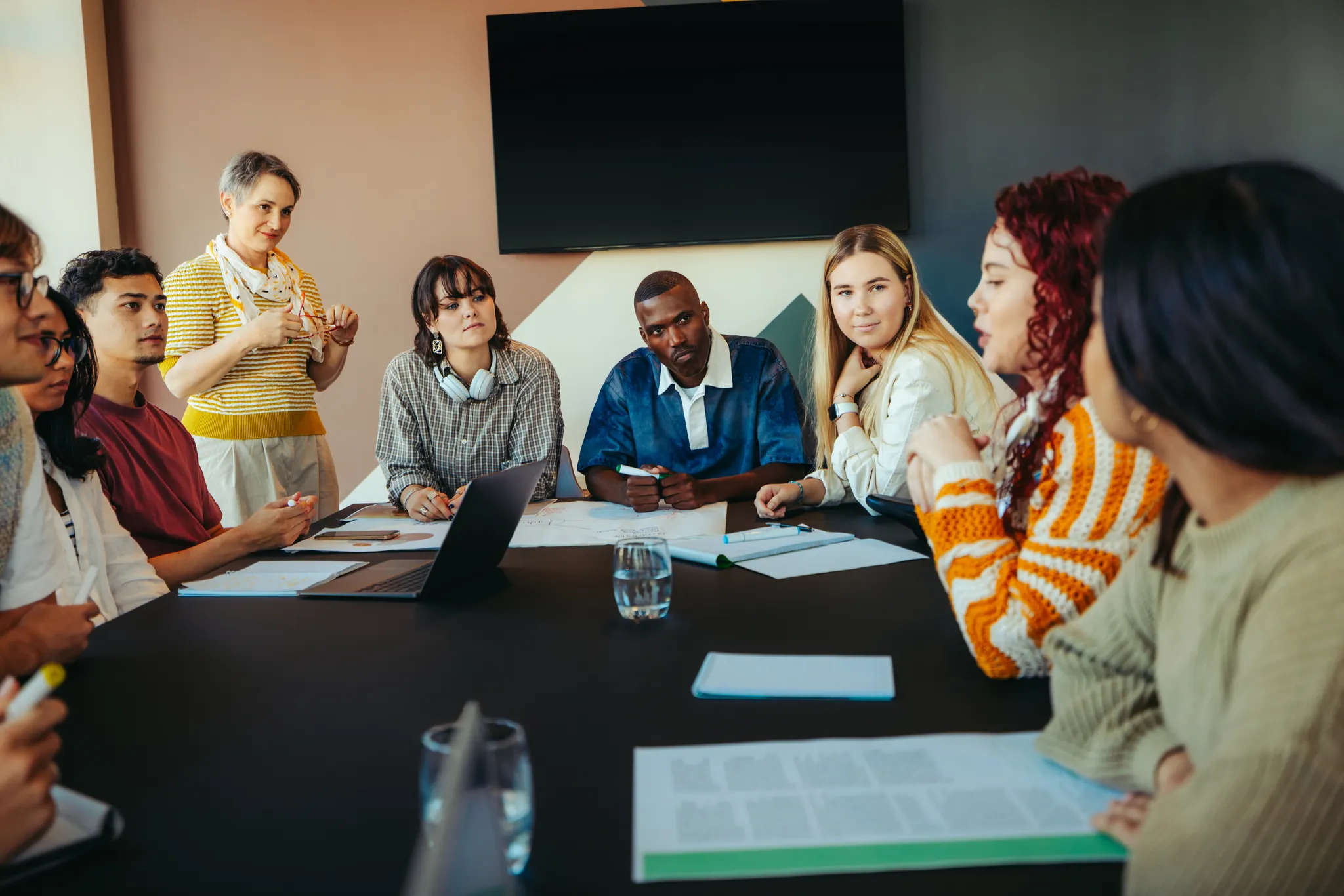
Teacher residencies can also create these kinds of partnerships. Similar to medical residencies, teacher residency programs connect preparation programs with sites of practice that are meant to allow candidates to engage in state-of-the-art practice, along with mutual improvement opportunities through research and development. The coursework and clinical curriculum are jointly developed and are interwoven to provide a powerful, coherent experience that connects mentor teachers and university faculty in a joint community of practice with the residents.
Residencies typically also provide aspiring teachers with the opportunity to earn a salary while they work alongside an expert educator for a year and take courses that lead to a teaching credential—and, often, a master’s degree. With teacher residencies, in exchange for a salary or financial incentive, participants commit to teaching in the same district after their high-quality residency ends.
Because they are designed collaboratively with partner districts, teacher residencies are built from the ground up to address local needs and priorities. Locally tailored solutions include preparing teachers in specific shortage areas (such as math, science, or special education) and providing opportunities for residents to learn about and build relationships with the broader community. Residency programs often provide support into the first year or two of teachers’ careers, bringing graduates together to build a community of practice across cohorts.4 One example of such a residency, between Newark Public Schools and Montclair State University, is described in Authentic, Aligned Partnership.
Structuring Cohorts as Learning Communities
Preservice programs organized in cohorts and clinical work within teaching teams create professional communities in which teachers can observe one another, share practices, develop plans together, and solve problems collectively. The cohort model can enable authentic professional collaboration for candidates and provide experience with building positive relationships and developing learning communities within their own classrooms. A cohort can act as a source of support for candidates learning to teach and developing adaptive expertise as they learn how to collaborate, communicate, integrate multiple perspectives, and give and receive feedback.
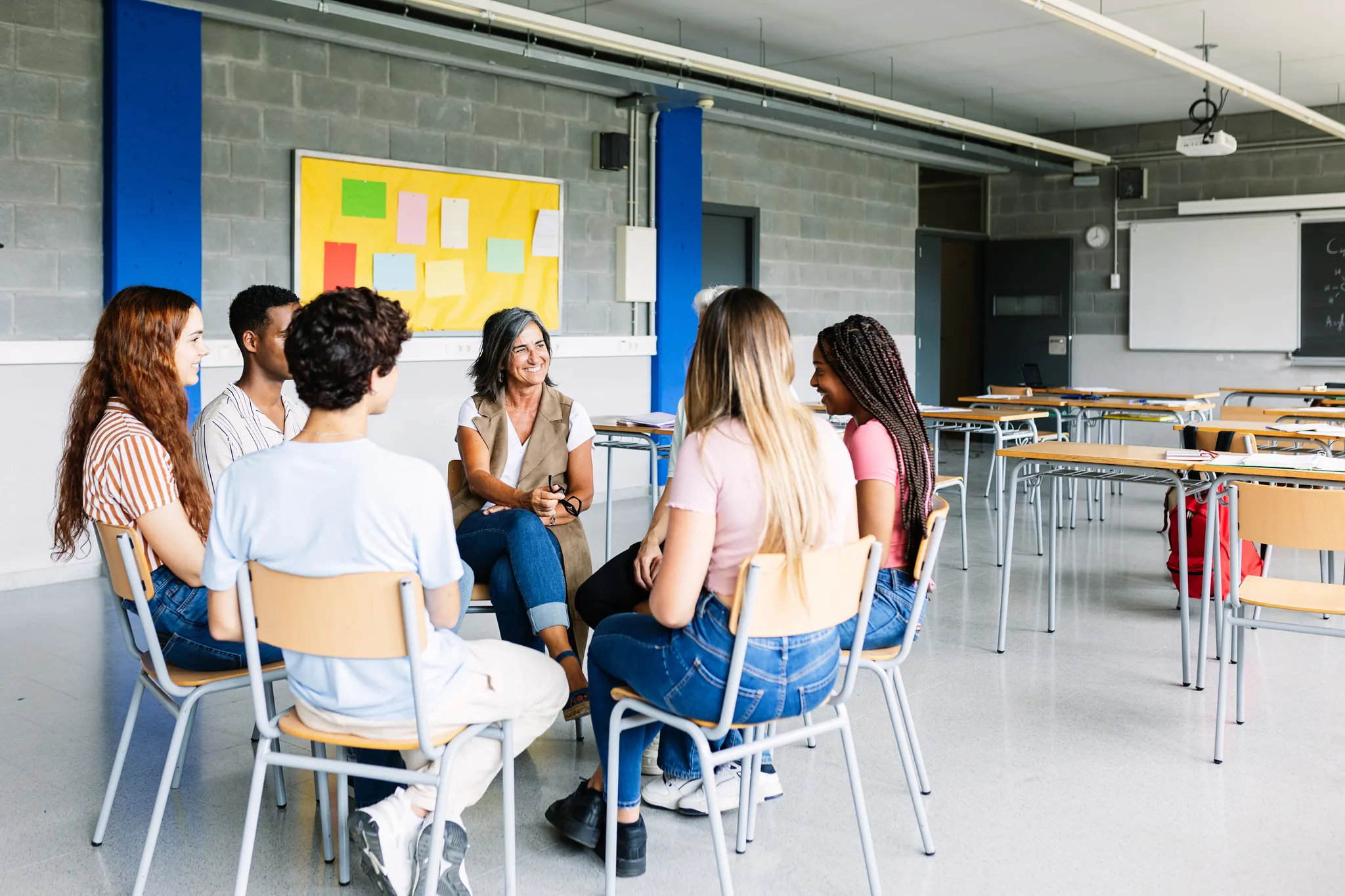
Cohort-based learning communities not only serve as an organizational structure to support the learning of teacher candidates but also, when expanded to include PreK–12 schools and educators, can enhance connections between preparation programs and district schools. As the experienced educators of preparation programs and partner schools interact with novice educators and teacher candidates, they provide guides and models of practice and also draw newer teachers, on the periphery of the profession, into more complex and embedded participation as educators.5 Retreats for teacher candidates and mentor teachers prior to or as part of clinical placements can improve communication among teams. Interacting with students, other prospective teachers, and expert teachers and sharing the tools of teaching (e.g., lesson plans, assessments) allows novice teachers to access “experiences, practices, theories, and knowledge of the profession” that would otherwise be unattainable.6 Furthermore, interaction within and among cohorts is important when candidates graduate. Continued engagement enhances novice teachers’ development and contributes to new teacher retention when cohorts are able to evolve into professional networks.7
In communities of practice, teacher candidates access the opportunity to engage with real problems of practice they are facing in their clinical placements in a structured, supportive environment.
In communities of practice, teacher candidates access the opportunity to engage with real problems of practice they are facing in their clinical placements in a structured, supportive environment.8 Deliberately constructed professional learning communities, including those that provide mentorship, can improve teacher practice and self-efficacy as well as school culture.9 This collaborative problem-solving builds teachers’ capacity to engage in productive struggle with one another and access different perspectives and contexts that will become a part of their permanent teaching repertoire and toolbox. These perspectives should include those of families and students, who are a part of the learning community that can reshape teachers’ views of the world as well as their teaching practices, as this example from the San Francisco Teacher Residency (SFTR) Program illustrates (see Learning From Students About Their Realities).
Learning From Students About Their Realities
1.
2.
3.
4.
5.
6.
7.
8.
9.
10.